
I built a shop that sells nothing
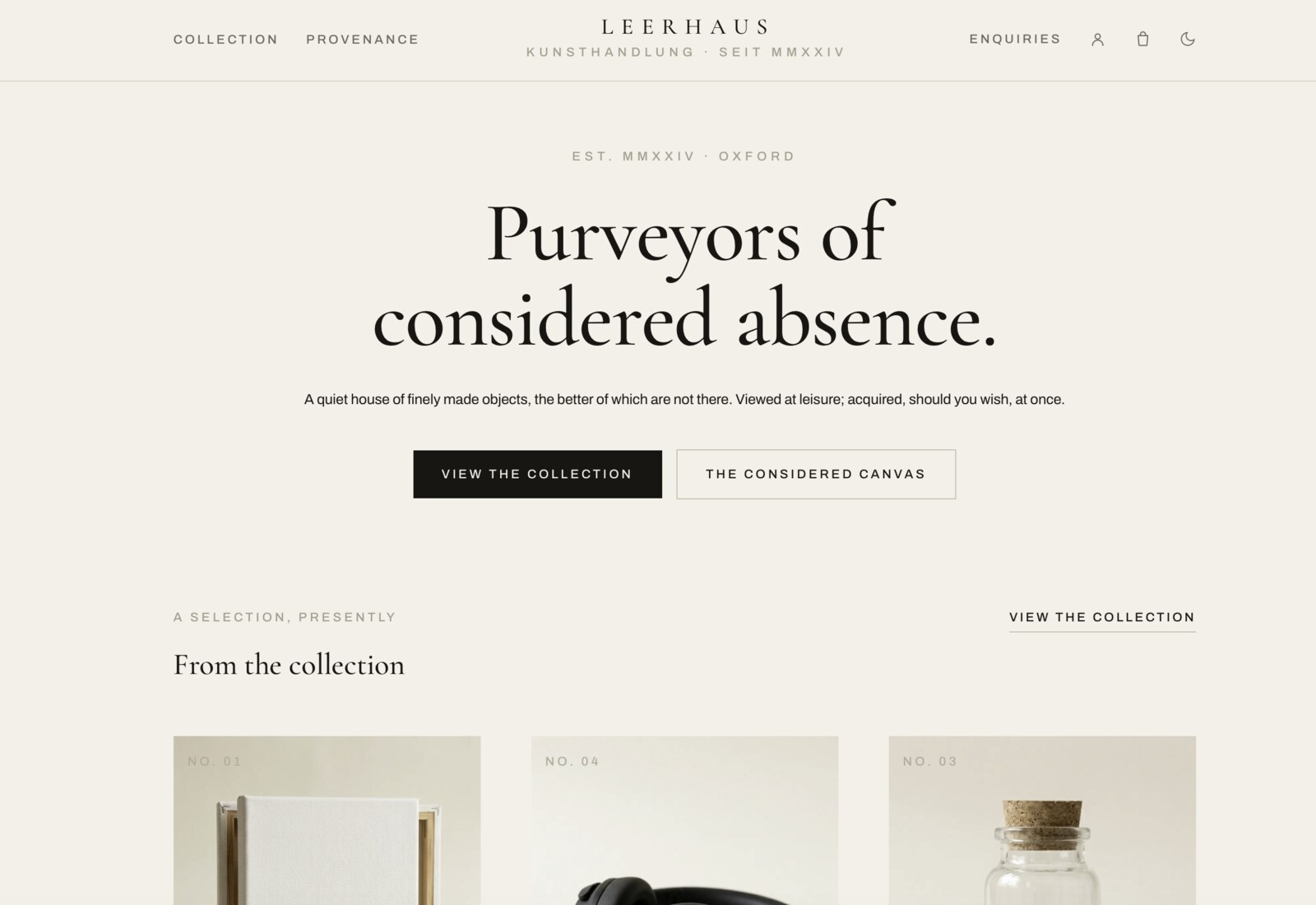
I built an online shop called LeerHaus. It sells nothing.
Not “nothing” as in it has no stock. Nothing as in the products are nothing, sold sincerely: a blank canvas, a jar of air, bottled silence — each one real, each one shipped, each arriving “with its absence intact” and a certificate documenting precisely what it is not. The tagline is “purveyors of considered absence.” It is, in every respect, a straight face wrapped around a joke.
Why a person would do this
Two reasons, in ascending order of honesty.
The respectable one: I wanted to gently poke at the top end of the internet — the world of premium everything, where a plain object photographed on a grey seamless with enough whitespace around it can be sold for four figures, and the copy is all “considered” this and “quiet luxury” that. LeerHaus takes that language completely seriously and applies it to literally nothing. If you’ve ever read a product page for a £90 candle and felt your eye twitch, it’s for you.
The real one: I wanted to build something, and a joke is the most fun a brief can be.
The actual excuse: testing FluentCart
Underneath the gag, LeerHaus is a test bed. I’ve built and maintained a lot of WooCommerce over the years, and I’d been wanting to properly try FluentCart — a newer eCommerce plugin pitching itself as a leaner, more modern alternative to WooCommerce.
You can read a feature list all day, but you don’t really know a tool until you’ve shipped something real with it — set up actual products, actual checkout, actual emails, and hit the awkward bits. A low-stakes project you don’t mind breaking is the perfect way in. A shop that sells jars of air is about as low-stakes as it gets, and it still exercises the whole flow: product types, variations, cart, checkout, order confirmation.
First impressions are genuinely positive — it feels lighter and more opinionated than a stock WooCommerce install, and a lot of the setup that usually means bolting three plugins together is just… there. I’ll hold off on a proper verdict until I’ve pushed it harder, but as a first outing it made building a fake shop suspiciously enjoyable. There’s a longer, more serious write-up in me once I’ve run it through something with real orders on the line.
Have a look
If you want a smile, visit LeerHaus and read the product pages with a straight face — the copy is the whole point. Buy a jar of nothing if the mood takes you; it’ll turn up, I promise, containing exactly what was advertised.
And if you’re a fellow WordPress person eyeing FluentCart, take this as the nudge: build the silly thing. It’s the fastest way to learn a tool, and you end up with a story instead of a tutorial.