
Meat, the luxury product
I’ve been vegetarian for about five years and I don’t think you need to be.
That isn’t false modesty. I genuinely don’t think the argument that works is the one where I tell you what to eat, and I’d rather make the one I think does.
The boring version of the story
I stopped the summer before my daughter was born. She turns five next month, which makes it easy to date.
It wasn’t much of a conversion. It was a long drift.
I ate meat as a kid, the same as everyone else at that table. What changed was moving out and becoming the person who decided what went in the pan. Nothing dramatic happened at that point either. I just wasn’t reaching for it, and nobody was putting it in front of me, and over a few years that quietly added up. By the last year or two it was down to about once a week, then about once a month, then only when somebody else had cooked.
Documentaries were part of it, though not in the tidy way that would make a better story. I watched a few of them over several years and none of them turned me round on its own. Seaspiracy was probably the closest thing to a tipping point, which is faintly ridiculous given it’s about fishing and I’d largely stopped with everything else by then. Cowspiracy before that. Each one took a bit off the pile rather than toppling it.
So there’s no moment to point at, which I know is the disappointing answer. One summer there just wasn’t much left to give up.
I don’t bring it up. If you’ve eaten with me you may well not have noticed, which is roughly the point. The vegetarian who tells you he’s a vegetarian is doing a different thing from the vegetarian who just orders something else.
Why conversion is the losing argument
Tell someone they should stop eating meat and you’ve made the conversation about them. They now have to defend their own choices, their childhood, their dad’s Sunday roast, and the whole thing becomes a referendum on whether they’re a good person. Nobody changes their mind in that conversation. They just get better at the arguments.
Show them a shed instead and you’ve made it about the shed. Almost nobody looks at intensive farming and thinks yes, that’s fine, I’m comfortable with that. The disagreement mostly evaporates. What’s left is a practical question about how we got here, which is a question people will actually engage with because it isn’t an accusation.
Welfare has a much wider constituency than vegetarianism. It includes people who eat meat every day. That’s not a compromise position, it’s just where the numbers are.
The campaign I do back
It’s Project Slingshot, who I’d happily give my support to, and have.
It’s a UK campaign whose stated aim is to end factory farming by 2040. Its first big push was about the carbon dioxide gas chambers used to slaughter pigs, and it ran as adverts across the London Underground, which is not where that subject usually turns up on a Tuesday morning. The billboards have since widened to chickens bred too heavy to stand up, and to farmed salmon.
What I like about it is what it doesn’t ask you to do. It isn’t a campaign to make you vegetarian. It’s a campaign about how the stuff is produced, aimed squarely at the industrial end of it, and you can agree with every word of it while eating a bacon sandwich.
My brother-in-law’s cattle
My brother-in-law is a farmer. Cattle, with arable alongside.
I’ve seen the fields, the barn and the routine of checking on them, and against the footage the campaigns put out it’s night and day. Not marginally better. A different activity that happens to involve the same animal.
Now, I want to be fair about that comparison, because it’s the bit people will rightly push back on. Undercover footage is selected by definition. Nobody films the average day. It’s reasonable to assume a lot of what gets published is the worst of it, and I can’t tell you what the middle of the distribution looks like because I haven’t seen it and neither have you.
But that cuts both ways. Nobody is sneaking a hidden camera into a shed where everything is fine, and nobody needs to, because you can visit those farms. The places that end up on film are the places you can’t walk into.
The thing both ends have in common
What separates my brother-in-law’s field from a shed with no daylight in it isn’t ethics. It’s price.
Factory farming exists because meat is cheap, and meat is cheap because we decided it should be available to everyone, constantly, at two meals out of three. You cannot produce it at that volume and that price in a field. The economics don’t allow it. The shed is not a moral failure that happened to the industry, it’s the only way to deliver what we asked for.
Go back a hundred years and the arrangement was different. You went to a butcher, who bought from farms you could more or less point at, and meat was a Sunday thing, or a thing you had when something good had happened. It was dear, so you had less of it, and because you had less of it you had the good stuff.
That’s the version I’d actually argue for. Not no meat. Expensive meat, eaten less often, from somewhere you could visit.
The obvious objection
Which is easy for me to say, and I know it.
“Meat should cost more” lands very differently depending on your weekly shop, and I’m not interested in a position that amounts to telling people on tight budgets to eat worse. The honest answer is that this is a question about farm subsidies, supermarket buying power and what we’re prepared to let the cheapest option be, and it isn’t solved by individuals feeling guilty in an aisle. It’s a policy problem that gets dressed up as a personal one, usually by people who benefit from it staying a personal one.
So I’m not going to pretend my shopping habits are the mechanism. They aren’t.
The dull practical bit
None of which makes the swaps any harder, so here they are anyway. If you did want to eat less of it without thinking about it much, they’re a good deal less interesting than the argument.
Lentils instead of beef in a bolognese or a lasagne, which after twenty minutes of simmering is close enough that I’d struggle in a blind test. Chickpeas instead of chicken in a curry, where the sauce was doing most of the work anyway. Beans and pulses generally, which are cheap, keep for years in a cupboard and don’t require anyone to have a position on anything.
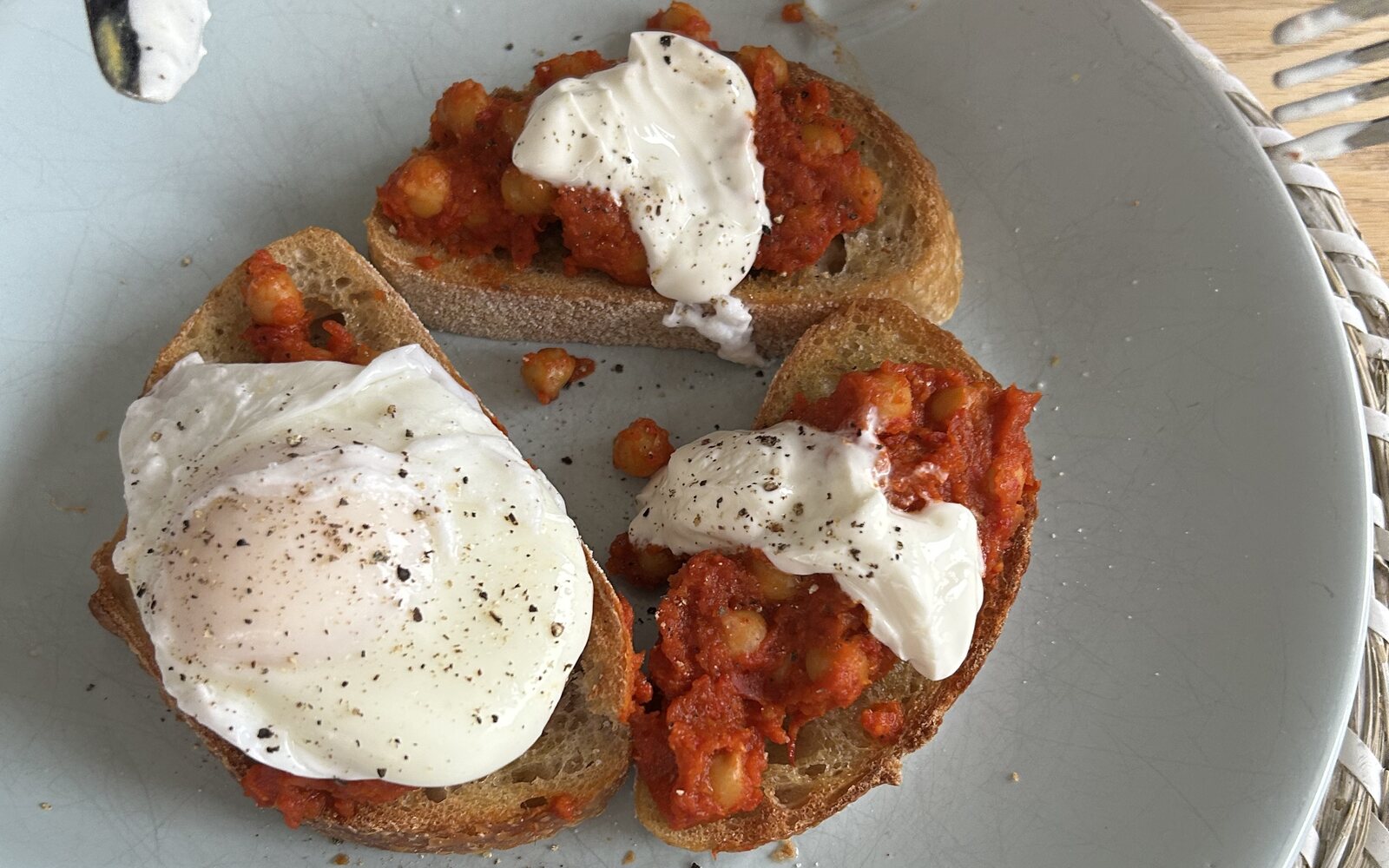
That’s not a lifestyle. It’s just Tuesday.
I’m still not going to tell you to stop. But I’d quite like us to get back to the bit where it was worth something.
If any of that landed, go and look at Project Slingshot’s campaigns, adverts and videos. They’re very good, and a better argument than this one.